Sunday, June 12, 2016

One Year


One year.

It’s been one year since we broke ground on the semicircle of sod and weeds surrounding a red brick wall in the West Bloomfield High School courtyard. In May, 2015, I had some promised literary plants and a couple of volunteers. By June I had picked up a second grant, and donations were trickling into the school website, but it wasn’t enough “seed” money to fund everything we needed to do over the summer.


I did not own a wheelbarrow. (Sorry, William Carlos Williams, I just hadn’t quite caught on yet.) I was begging – yes, begging – for dirt from the big box stores, from landscape supply companies, on Facebook, from signs on the side of the road that promised “free fill dirt.” The Mark Twain wisteria cuttings? They DIED. The Emily Dickinson rosebush cuttings? They DIED.


I was starting to freak out. How was I going to make this happen?

And then, on July 31, 2015 (a VERY important date in literary history; it is a birthday shared by Juliet Capulet AND Harry Potter as well as Harry Potter’s creator, J.K. Rowling), something magical happened. Amy Goldman wrote me an email at 9:17 P.M. that night that changed the course of this project completely.

I know that you are working to fund this project and what a difficult job that can be. My grandparents established a family foundation prior to their passing in order to help organizations that our family felt were meaningful. Upon hearing about this project, I presented a request to my family to consider a donation.

I am excited to tell you that the Garber Family Foundation will be donating to the Literary Garden.

The donation was completely unexpected (I did not know Amy, nor had I had her children in my classes), but I could not have known that three weeks later Amy and I would be, with dozens of other volunteers, hauling wheelbarrows full of pea gravel and dirt as we began creating a home for the plants I did not yet have. National Public Radio came out to cover our fledgling efforts!


Also in August, I visited the Kurt Vonnegut Memorial Library and met with founder Julia Whitehead, who agreed to be our Literary Garden sponsor; more funding meant more essentials for the garden. Even more exciting, Julia set up the opportunity for Melissa and I to meet Edie Vonnegut to get the Vonnegut hydrangeas for the garden.


By September and October, the plants came rolling in, by mail and by car, a plethora of perennials populating the backseat of my Jeep, Ralph Waldo Emerson’s false indigo pods shaking in terror as we made our way into Michigan. My students and I planted on a warm October afternoon under the direction of master gardener Dani Connolly. We made it into The Detroit Free Press, my mustachioed mug plastered across the front of the Life section for the world to see!


In November, tragedy struck our West Bloomfield community for the third time when we lost another tenth grade student to suicide. I had just learned about the Carton2Garden challenge and wondered how we could use it as an opportunity to help the students process their grief. Driving home one night, my playlist randomly shuffled to They Might Be Giants – “Put a Little Birdhouse in Your Soul.” My mind immediately flashed to Emily Dickinson:


What if we made the cartons into BIRDHOUSES? Birdhouses that wouldn’t just house our feathered friends in the courtyard, but birdhouses that would symbolically remind our struggling students to keep room for hope to perch in their very souls, that things would get better? I called on my dear friends Karen Matynowski (science) and Mimi Hoffman (art) for help. I knew I could not do this alone, but I was so excited about the idea, I had to share it immediately!


This was another aspect to the garden entirely, but it was so very important. So important to acknowledge the grief and pain and worry I saw in their writing. None of us could make sense of these tragedies, but we could try to move forward, one inspirational quote at a time, nudging each other towards brighter days.


I would stand at the window over the winter and worry endlessly about the school, our students, the plants. Would we survive the ice, the frost, the snow? It was so important that we try.


My dear friend Robin Tracey and her team at Moonlink Studios / Ringside Creative donated their time and efforts to create a video for us to submit to the Carton2 Garden contest in April, and in May, we found out that we were one of 14 national award winners! Prairie Farms Dairy rewarded our students with an ice cream social, and The Detroit Free Press covered our award in its Life section on June 11, 2016.

In May, the West Bloomfield Public Library announced that they would be donating a deposit collection of books to our WBHS iCenter to allow students to check out books for the authors they find interesting in the garden. Media specialist Julie Abeska and I are working on providing a special space in the iCenter to showcase this generous collection.

Spring finally sprung, and after a rash of late frost warnings, we finally had our official spring planting on June 3, 2016. We have been approved to begin a WBHS Literary Garden Club and have over 60 interested members signed up – as a matter of fact, they have already begun working on cleaning the courtyard, and they helped with the spring planting and with the decorating for the Literary Garden Grand Opening Gala.


On Friday, June 10, we opened the doors of the courtyard to the West Bloomfield Central Administration, School Board, Educational Foundation, donors, volunteers, students and parents to give them a chance to see the garden in all of its glory. 


None of this would have been possible without the generosity of the organizations that have supported the garden through generous grants, starting with the West Bloomfield Educational Foundation, the Garber Family Foundation, the Kurt Vonnegut Memorial Library, the Pittsburgh Plate Glass Public Education Leadership Community Grant, the Penguin Random House Teacher Awards for Literacy, the Troy Garden Club, and the Carton2Garden Middle/High School Award.


There would not be a garden without the herculean efforts of the museums, homesteads, families, scholars, and organizations of authors - and some of the authors themselves! -  from around the country. They include: Pearl S. Buck, Willa Cather, Eugenia Collier, Emily Dickinson, Sharon Draper, Ralph Waldo Emerson, Nathaniel Hawthorne, William Faulkner, F. Scott Fitzgerald, Nikki Giovanni, Ernest Hemingway, Zora Neale Hurston, Ken Kesey, Thomas Lynch, Carson McCullers, N. Scott Momaday, Flannery O’Connor, Holly Painter, Marge Piercy, Edgar Allan Poe, Theodore Roethke, John Steinbeck, Wallace Stevens, Mark Twain, Kurt Vonnegut, Alice Walker, Walt Whitman, and Jeff Zaslow. I am so grateful that when I came knocking at your doors, you responded so generously. I know that you don’t necessarily have the time and funding that you need in your own organizations, and I am endlessly grateful that you took the time to bring a swath of American literary history to the students of West Bloomfield High School.


We have so much more that we want to do! Here are just a few of the goals we have set for the next year.
a. Care and maintenance of the plants of the garden, year round
b. Acquire new plants generated from student reading, interest, and discussion
c. Read books and poetry not already in curriculum tied to the authors and poets in the garden and explore the connections to the plants.
d. Write “secret poetry” on the sidewalks in the courtyard that only shows up when it rains. 
e. Plan poetry slams, yoga in the garden, and other events would showcase student talent and provide opportunities for student community building.
g. Provide West Bloomfield community opportunities to create literary-themed art projects in the courtyard.
f. Become the umbrella organization for courtyard improvement. We would work with the Art Department on the Art Garden to help get them up and running. They will apply for grant money this fall to revitalize their end of the courtyard.

If you would like to support the garden, we have set up a way for you to do so that provides a more lasting legacy. You can now purchase a tile to commemorate a special moment in a student’s life, to cement a connection you have to the Literary Garden, or to note some other seminal moment you have connected to an American author or with West Bloomfield High School. See the brochure information here for more details.

Thank you, all of you, for making the West Bloomfield Literary Garden a reality, and stay tuned for YEAR TWO!

Friday, April 15, 2016

Birdhouses and More - Read All About It!


It all started with a simple paper carton...with some inspiration from Emily Dickinson...


 and They Might Giants...

Read all about our latest garden project in the West Bloomfield Spectrum here!

Friday, March 11, 2016

A Student’s Perspective on the Literary Garden


A Student's Perspective on the Literary Garden

By Lily Rosenberg, 
West Bloomfield High School

Every day I do the same thing, ESPECIALLY in school. I go to a class, I do my classwork and then the teacher gives me homework that may or may not match my skill level because school is not personalized to me. I go home to spend hours and hours on it and possibly still won’t understand it. Over and over and over and over again for seven classes. It’s monotonous. It’s dull. And frankly, it’s flat out boring. Finally somebody is doing something DIFFERENT! Finally somebody realizes that we are not made to sit in a four white walled classroom with no windows, hard chairs, and glaring lights while staring at our computer screens all day. The literary garden gives students a chance to think differently about coming to school and the way a classroom is run. It breaks the routine of sitting in a desk so that we can go outside and experience nature. It challenges the norm so we can learn in a way that is not based on points and grades.

Many adults have recognized that the monotonous routine of school is limiting students’ creativity and imagination. Parents do not want their children to go into the fine arts professions such as a singing or photography because it’s unpredictable and might not bring in a steady income. This shows how schools no longer value the creativity and imagination that should naturally accompany certain subjects, including American literature. The literary garden is an example of how we can use creativity and nature to expand our freedom and decrease our stress in school. It provides students with relief from the stress that comes with constant work because when did school become solely about grades and homework? Students don’t prioritize learning and education but instead put grades and points first. The garden defies these standards because you cannot get points or a grade for feeling the connection between nature and literature. All you can gain is the experience. Shouldn’t that be enough? The garden opens up the doors of creativity for those students who feel confined and stuck in the rut of school life.


I have migraines in almost all of my classes every day of the week. Sometimes my eyes glaze over and I cannot see the board because I have been staring at it for too long. I noticed immediately the first time Mrs. McQuillan took us outside that when I am able to breathe the fresh air and see the natural sunlight that my migraine will quickly ease away. When I am outside, I find a new path for my mind to travel because I’m not confined to the strict learning guide that most teachers have set. I learn in my own way.  I am not stuck in a rut. When given the opportunity, I can make connections from the real world and plants that I see every day to the literature we read in class. Now, every time I see daylilies, I think of Emily Dickinson. Every time I see daisies, I can make a connection to The Great Gatsby. When I see the sedge in the garden, I picture the rough environment of the house in Poe’s “The Fall of the House of Usher.” Without the garden, I would never be able to make those connections. There is no stress in the literary garden. I’m never wrong in the garden and nobody judges me because there is no limit to the creativity and ideas that can be produced when connecting nature’s big ideas to that of famous and extraordinary writers.  

Tuesday, February 16, 2016

Hemingway and Steinbeck Plants

This week has been full of unexpected surprises! My cousin David headed down to Key West, Florida, on vacation, so I asked him to do me a favor: would he go to The Ernest Hemingway Home and Museum in Key West and ask for a plant donation?

David, you have a mission!
David and the master gardener, Dustin, picked several specimens from the Hemingway garden.

They include saplings of mahogany and tamarind trees:

Dustin also sent back royal poinciana seeds.
Royal Poinciana Seeds
As these are tropical plants, we may have to care for them indoors, but this will just allow the literary garden to expand beyond the parameters of the courtyard!

It's also exciting to have Hemingway plants from two very different locations: Michigan and Florida. This will allow me to pull writing from those different periods in Hemingway's life and ask the students to consider how his landscape affected his subject matter. I'm so grateful to Chris Struble of The Michigan Hemingway Society and to The Ernest Hemingway Home and Museum for their support of the West Bloomfield High School Literary Garden. Thanks, too, to David for all of his help!

In addition, the Director of the National Steinbeck Center, Susan Shillinglaw, sent along the John Steinbeck plants I talked about in last week's post. They arrived today!


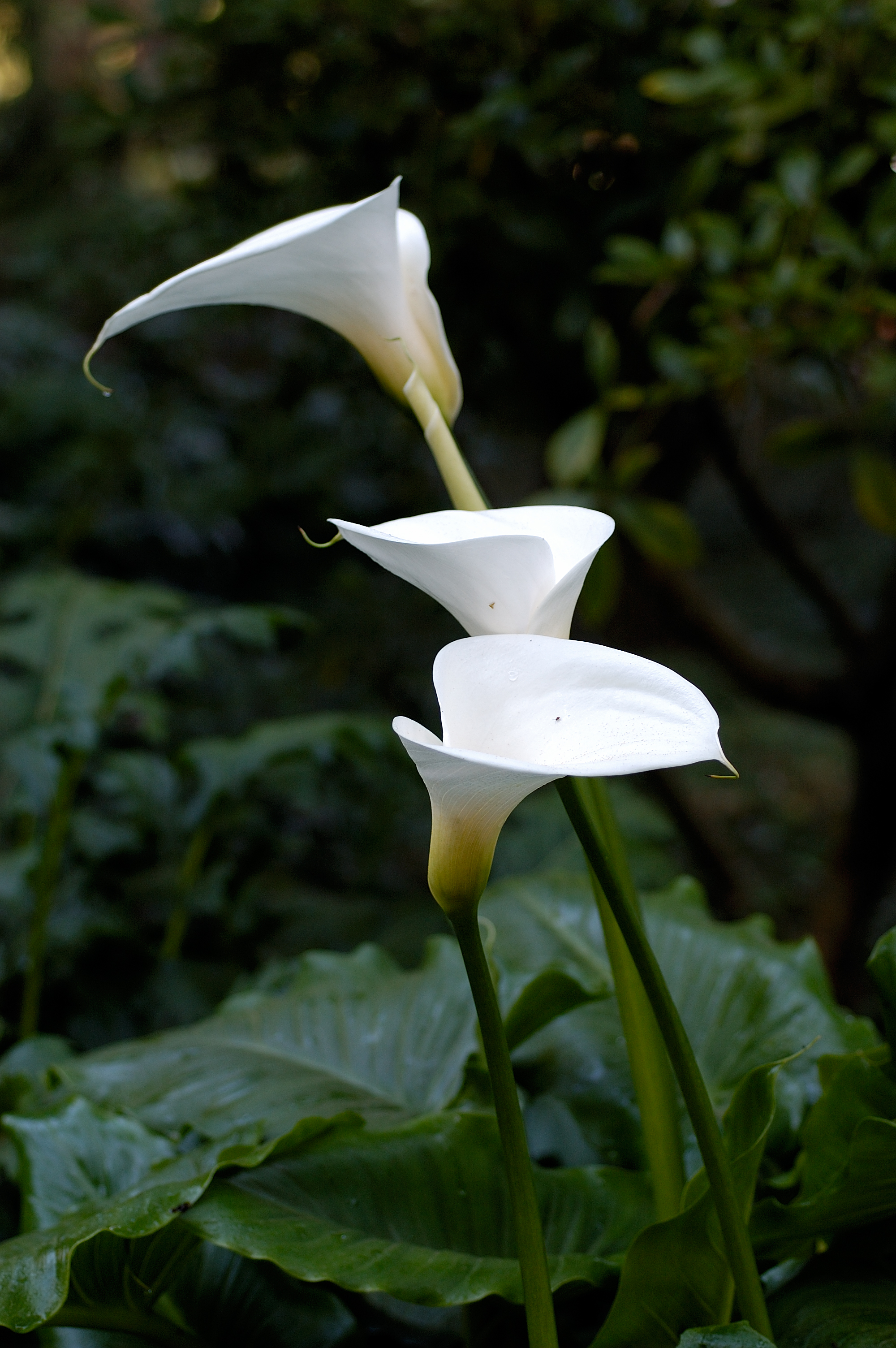
They may look a little rough, but if YOU tried traveling in a box from Salinas, California, to Michigan in mid-February, you might be huddled and frozen, too! Here we have an "indestructible" calla lily, a naked lady, and a succulent plant. Our intrepid master gardener, DaniAnn, will take charge of all of our new arrivals tomorrow. Many thanks to Susan and the National Steinbeck Center for their support of the Literary Garden!

I have some exciting news on the horizon regarding Pulitzer Prize winning author Alice Walker...so stay tuned!


Sunday, February 7, 2016

Counting Down to Spring

Welcome to my first post of 2016!

When I last left off, we were about to plant the West Bloomfield High School Literary Garden in preparation for fall. Thanks to Kristen Jordan Shamus of the Detroit Free Press, you can read all about our endeavors here! I'm especially a fan of this photo: 
There are few photos that capture the essence of my teaching quite like this one, but yes, this is a typical day in Mrs. McQuillan's classroom, Poe regalia and all. You can also see the daisies we planted in honor of The Great Gatsby there on the bottom left. 

I've thanked many of the folks who have sent us plants, bulbs, and cuttings, but since November, I have been in contact with a few more, and I would like to take this opportunity to publicly thank them for their support of the Literary Garden.


I've long been a fan of Flannery O'Connor's short stories, so I was beyond excited to connect with April Moon Carlson, the Assistant Director of Andalusia Farm, the Home of Flannery O'Connor. April sent us a "few of the bearded white irises from Andalusia Farm (where O’Connor’s peafowl wreaked havoc upon her mother’s lilies, leaving an overabundance of the lovely bloom)." They made it just in time, too - they were the last plants I managed to get in before our first snow. Thank you, April!


Back in December, I received an unexpected - and wonderful - email from retired English teacher Michael Brown of Missouri, who wrote: 

"My wife gave me a Mark Twain bur oak about 15 years ago.  Starting as a 3-foot-tall sapling, it has thrived in our yard and is now about 30 feet tall.  It is from the Historic Tree association, and it is a direct descendent of the bur oak in Hannibal, MO, at the entrance to the cave Twain used as a springboard for his Tom Sawyer cave (where Tom and Becky Thatcher got lost).  I don't know if my tree was started from a cutting or an acorn, but I've taken a few acorns (the ones the squirrels haven't filched) the past few years, and I successfully started a sapling 3 years ago and gave it to another Twain fan on his 70th birthday.

I wanted to offer to send you an acorn or two if you would like to try to grow one with your class.  Don't know if you have space for a tree of that size in your garden, but even if you got it started in a pot and gave it away, auctioned it, or whatever, it might make an interesting class project next spring."  


I was taken aback by Michael's generous offer but eagerly accepted. I was jumping up and down when his beautifully hand lettered package arrived in the mail this week with a message for me and my students. Thank you, Michael!


Last night I heard from Susan Shillinglaw, Director of the National Steinbeck Center. We had hoped to procure a mattress vine from John Steinbeck's former home, but after further inquiries, Susan had other ideas. She writes: "...we decided on other plants from the yard that have been there since JS's time--a calla lily we uprooted, a naked lady, and a succulent that grew near the outside fireplace that John and his father built in 1930."

Naked Lady
Calla Lily
Susan also wrote a fantastic article supporting our efforts for the National Steinbeck Center Newsletter in October, 2015. You can find it here on page seven. Thank you, Susan! You can bet I'll be checking the mail every day this week!

I would also like to thank the Troy Garden Club and the Penguin Random House Teacher Awards for Literacy for their generous support of the Literary Garden. Not only did I receive financial support for the garden, but I won a LOT of free books - every English teacher's dream!

And despite the bitter cold, when Dr. Melissa Talhelm came out to conduct more research in December, we did manage to celebrate Emily Dickinson's birthday out in the garden! Happy birthday, Emily Dickinson!


Our master gardener, DaniAnn, came out this week while we had a bit of a thaw and checked on the plants. She definitely saw signs of life!


Even though some of the plants didn't make it (yes, Chris Struble, you'll be seeing me in Petoskey in the next few months to get more Hemingway mint!) our fingers are crossed for a healthy and vigorous spring. Plus, we have more planting to do!

My students are chafing at the cold weather and cannot wait to get back outside to their garden classroom. With their permission, I'll be sharing some of their observations on the garden in my next post.

You can read all about the garden in the press coverage we've received in the last six months:

Detroit Free Press: http://www.freep.com/story/life/family/kristen-jordan-shamus/2015/10/31/west-bloomfield-high-literary-garden/74750992/
National Public Radio: http://www.npr.org/2015/08/26/434821478/authors-garden-clippings-grow-students-love-of-literature
University of Michigan School of Education: http://www.soe.umich.edu/news_events/news/article/nature_takes_root_in_pedagogy_with_alums_literary_garden/
Oakland University English Department: http://wwwp.oakland.edu/Assets/Oakland/english/files-and-documents/The%20English%20Channel%20Volume%2015%20Issue%201%20Fall%202015.pdf
Bustle.com: http://www.bustle.com/articles/106758-a-literary-garden-is-a-thing-all-book-lovers-are-going-to-want-stat
West Bloomfield Beacon: http://www.candgnews.com/news/growing-american-authors-85792
West Bloomfield Spectrum: http://wbspectrum.com/7259/news/literary-garden-set-to-bloom-at-west-bloomfield/
USA Today: (reprint of Free Press article) http://www.usatoday.com/story/life/family/kristen-jordan-shamus/2015/10/31/west-bloomfield-high-literary-garden/74750992/

Most of all, I would like to thank all of YOU for your support of the Literary Garden! Your kind messages, emails, monetary support, and generous offers of help have made this dream a reality. I cannot wait to see what the summer holds. THANK YOU!
                                       

Sunday, October 18, 2015

Plants, Path, and Professor: Persistence Pays Off!

I began the literary garden project in October, 2014 on a wing and a prayer. It was a half-formed idea in my head that was full of hope, but did not have many answers - or even a plan.

I am pleased as punch to report that the idea has grown from a seed into a full-fledged bloom!

This fall, West Bloomfield Education Foundation Board Member Kevin Goldman and his friend Tim (with some help from my students) laid the garden path.


Next, the plants began to arrive:

Bittersweet vine seeds from Willa Cather's home in Nebraska!
Thanks for all of your help, Jackie Lemmer!

I was SWOONING when I read the letter from Willie Thompson at the Scott and Zelda Fitzgerald Museum. That letterhead! The heady smell of magnolia seeds!
Alas, we had to request more as some were crushed in transit.
Chris Struble made time out of his busy schedule to send some of Hemingway's mint from northern Michigan. Thanks, Chris!
The ivy from Poe's mother's grave in Richmond, VA arrived just in time for my Edgar Allan Poe unit. Thanks, Chris Semtner!
Nick Norwood met Professor Melissa Talhelm in Nyack, NY to procure some hostas from Carson McCullers's garden. Thanks to both of them for these shade-loving plants!
Melissa and I met in Pittsburgh to hand off the plants we gathered at Kurt Vonnegut's home and The Old Manse in the Boston area last month. The butterfly milkweed flew all over my car, and the
asparagus tipped over just as I made it to master gardener DaniAnn Connolly's house! Thanks, Dani, for taking charge of our precious cargo!

Meanwhile, the tech students in our drama department (along with the talented and generous John Verloove) went to work recreating Kurt Vonnegut's charming Cape Cod cottage door.
They were so proud of their hard work!

As if all of that wasn't enough, former WB student Elly Rosenthal procured the very gnome we needed all the way from ENGLAND!
Look for another blog post on the gnome's travels next week!
The very best part of this project has been working with Dr. Melissa Talhelm. Sixteen years ago, she was my cooperating teacher at Northville High School when I was a student teacher. I could not be more delighted that we have reconnected, and I am so proud to call her my mentor, my peer, and my very dear friend. I could not have done all of this without her help! Her research on the literary garden will eventually provide a valuable resource for English educators around the country. I am so excited to be a part of this groundbreaking work!

I'd like to end on some terrific news: I was named a runner up in the Penguin Random House Teacher Awards for Literacy, AND I received a second grant from the West Bloomfield Educational Foundation to continue our work in the garden. I want to thank BOTH of these fabulous organizations for their generous financial support of the West Bloomfield High School Literary Garden. 

Here's hoping for a productive week of planting! 


Sunday, September 20, 2015

Boston or BUST!

I recently returned from a whirlwind weekend in Boston to gather plants for the garden. I am so grateful to the Vonnegut family and to the folks at The Old Manse for their generosity and kindness!

I can't begin to tell you how wonderful it was to visit the site of Edie Vonnegut's famous photo of her father.


Dr. Melissa Talhelm and I worked hard to wrest some of these beautiful plants out of the ground.


They were deeply rooted with a gorgeous array of colors!


We are hopeful that the plants do not suffer terribly from root shock and are transplanted successfully to the garden this fall! You can read about Vonnegut's love for hydrangeas here.


We are so grateful to Edie Vonnegut for her support of our project!

After a tasty lunch, Melissa and I headed to Concord, MA, to visit The Old Manse. Ralph Waldo Emerson and Nathaniel and Sophia Hawthorne called The Old Manse home, and Henry David Thoreau planted a garden there for the newlywed Hawthornes. 

It was so exciting to meet our contact, Tom Beardsley, The Old Manse Site Manager, and Susan Adam, the groundskeeper.

Dr. Talhelm speaks with Tom Beardsley.

Susan Adam digs out a plant for us.
They kindly showered us with plants for the garden! Here are some highlights:

One of the more unusual plants we have acquired is purple-headed amaranth. Amaranth is an ancient grain that has been cultivated for thousands of years and has recently risen in popularity as consumers continue to search for gluten-free options.


The garden will also feature bloody butcher corn, a deep ruby colored corn most often seen in ornamental fall decorations.


In a nod to Concord's rich history, we are also hoping to propagate cuttings from a large Concord grapevine that drapes the side of The Old Manse.


We are deeply grateful to Tom and Susan for all of their help and generous plant donations!

We couldn't visit Concord without stopping by Sleepy Hollow Cemetery to visit the graves of Ralph Waldo Emerson, the Hawthornes, Henry David Thoreau, and Louisa May Alcott and her father, Bronson Alcott.


We also had to stop at Walden Pond for selfies with Thoreau...


and a glorious dusk at Walden Pond.


More to come as the plants arrive in the next few weeks!